BACK
0 --> 1
PRODUCT DESIGN
BRAND IDENTITY
Telehealth app design – Thrivio
Designing a brand identity + prototype for a fast-moving medical startup
TL;DR
Working app prototype, team pivot, established brand direction
Role
UX/UI Intern
Team
5 interns, 1 PM, 2 co-founders
Timeline + Outcome
10 weeks, handed off for development
Project context
Thrivio is an AI-driven healthcare startup offering primary, urgent, mental health, and pediatric digital care. Operations were fast-paced with limited resources.
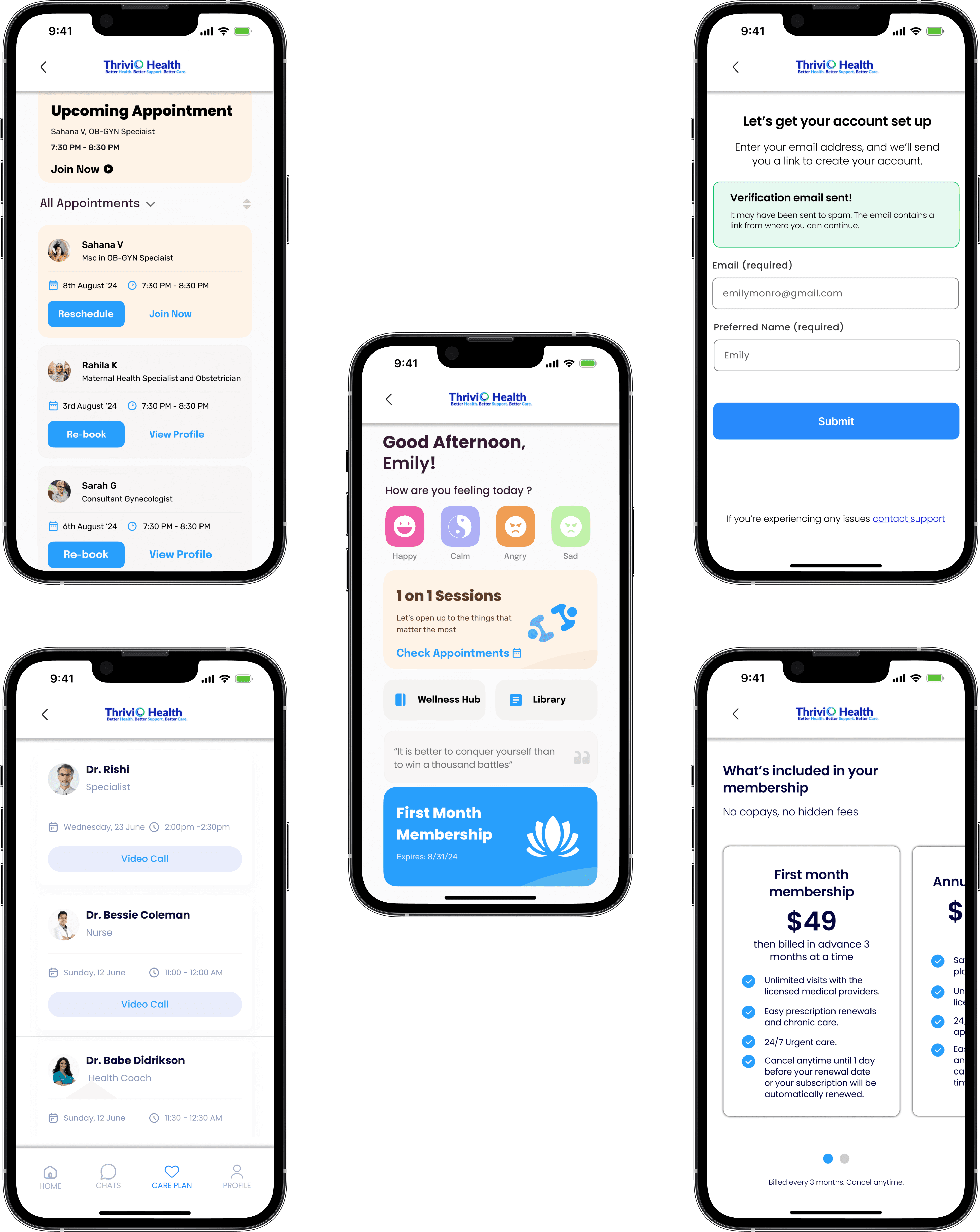
Note: Due to the nature of this project, visuals are limited.
Problem
The company lacked a cohesive brand identity, user direction, and clear product vision—creating scattered requests and slow progress. Unclear role expectations, conflicting deliverables (branding + video + MVP), and inconsistent vision from co-founders lead to constant rework.
How might we align co-founders’ expectations and create a cohesive brand + product direction under tight constraints?
Competitive analysis
I reviewed competitor telehealth apps to justify one unified visual direction. In addition, I also talked with my interns about the deliverables we were assigned. Overarching pain points included:
No clear selling point on old website
Overwhelming deliverables
No time for formal user research
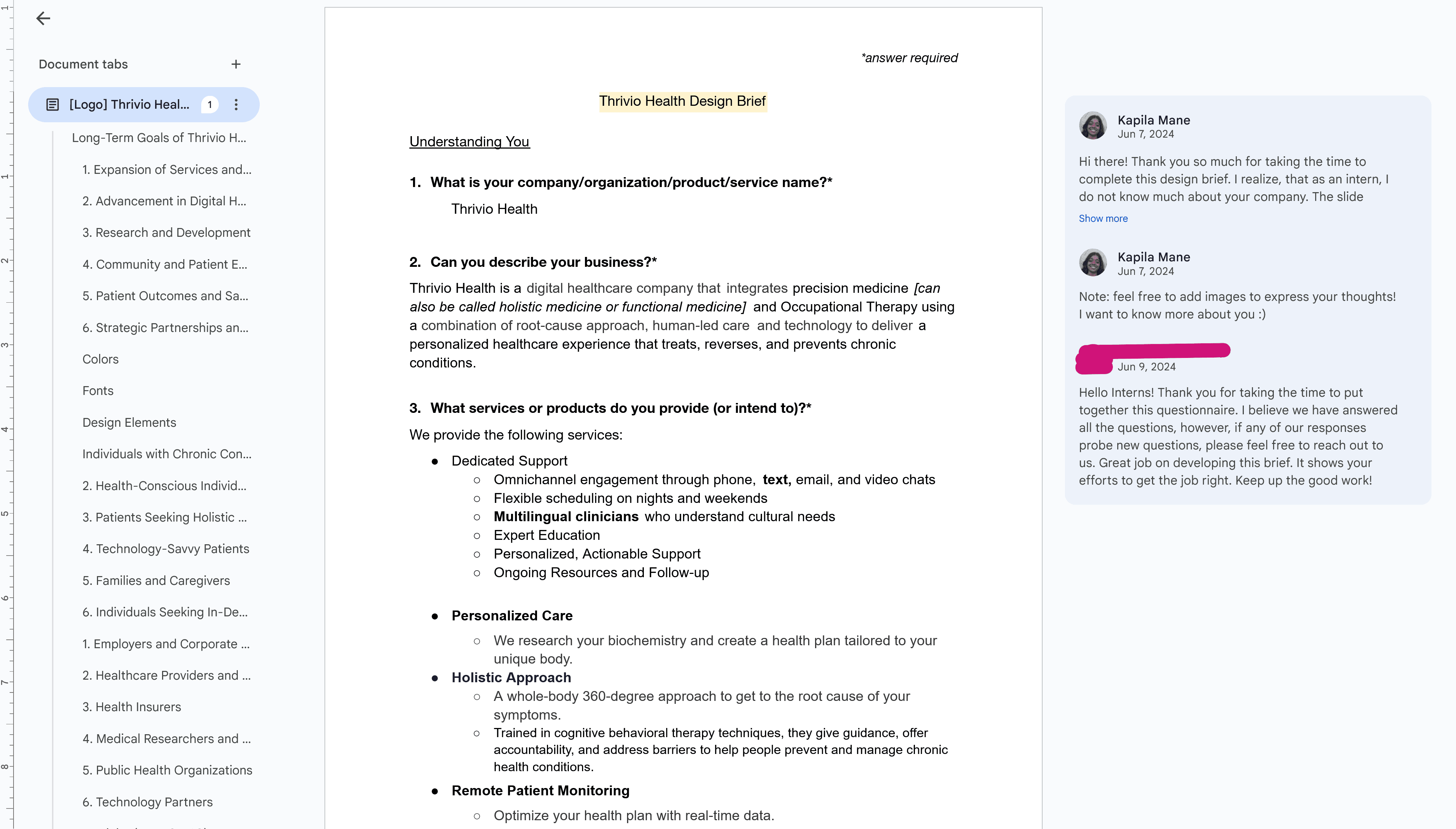
I realized that the team did not understand what the co-founders wanted; so, I developed a design brief and interviewed the co-founders. I ended up using the design brief to keep key aspects of potential users in mind as there was no time for formal user research. The brief included questions about the startup’s history, and key words they associated with the company.
Requesting a team pivot
With this information in tow, I packaged the team’s change in direction as a way for the company to save time + money by outlining what to focus on first:
Cohesive visuals + brand identity
A simple, informative website with a signup sheet
A working prototype
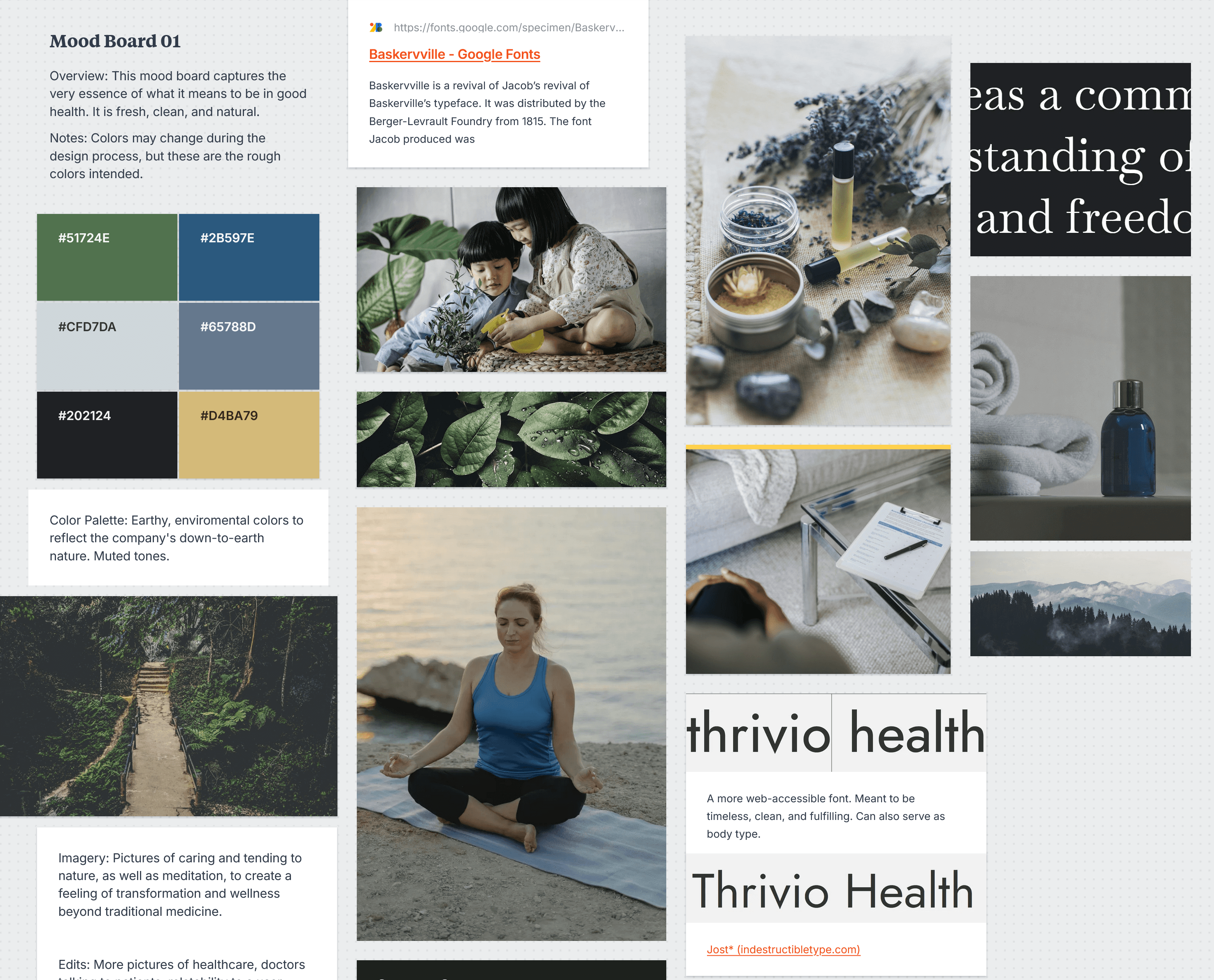
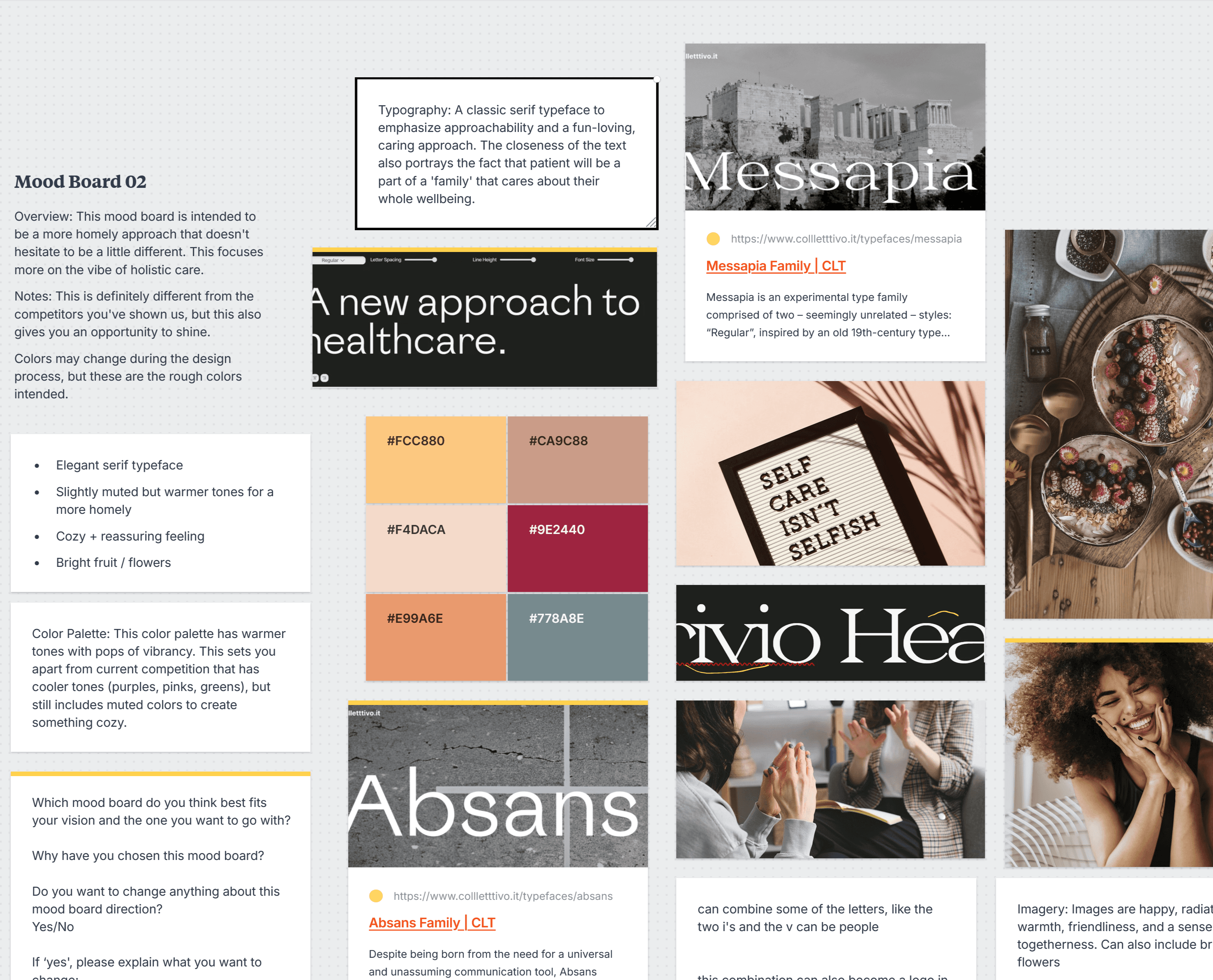
This change and reduction in scope was accepted, and we immediately got to work on brainstorming. I developed two moodboards in Milanote for the co-founders to pick from.
Exploration & Ideation
Two moodboards were created, shown below. Co-founders wanted to merge moodboards, which would have cost time. I eventually successfully advocated for choosing the first one, using competitive analysis to justify the decision.
Development
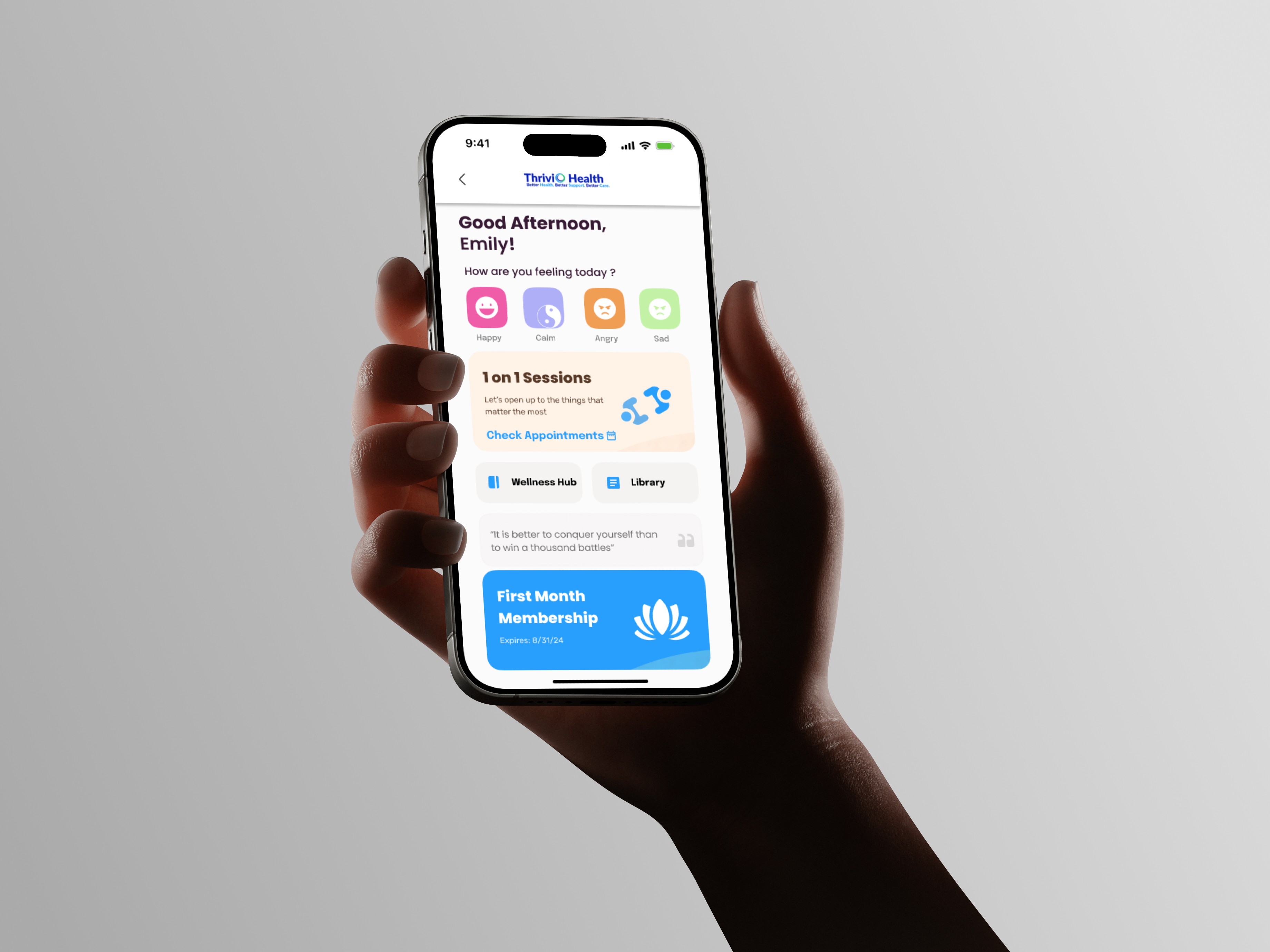
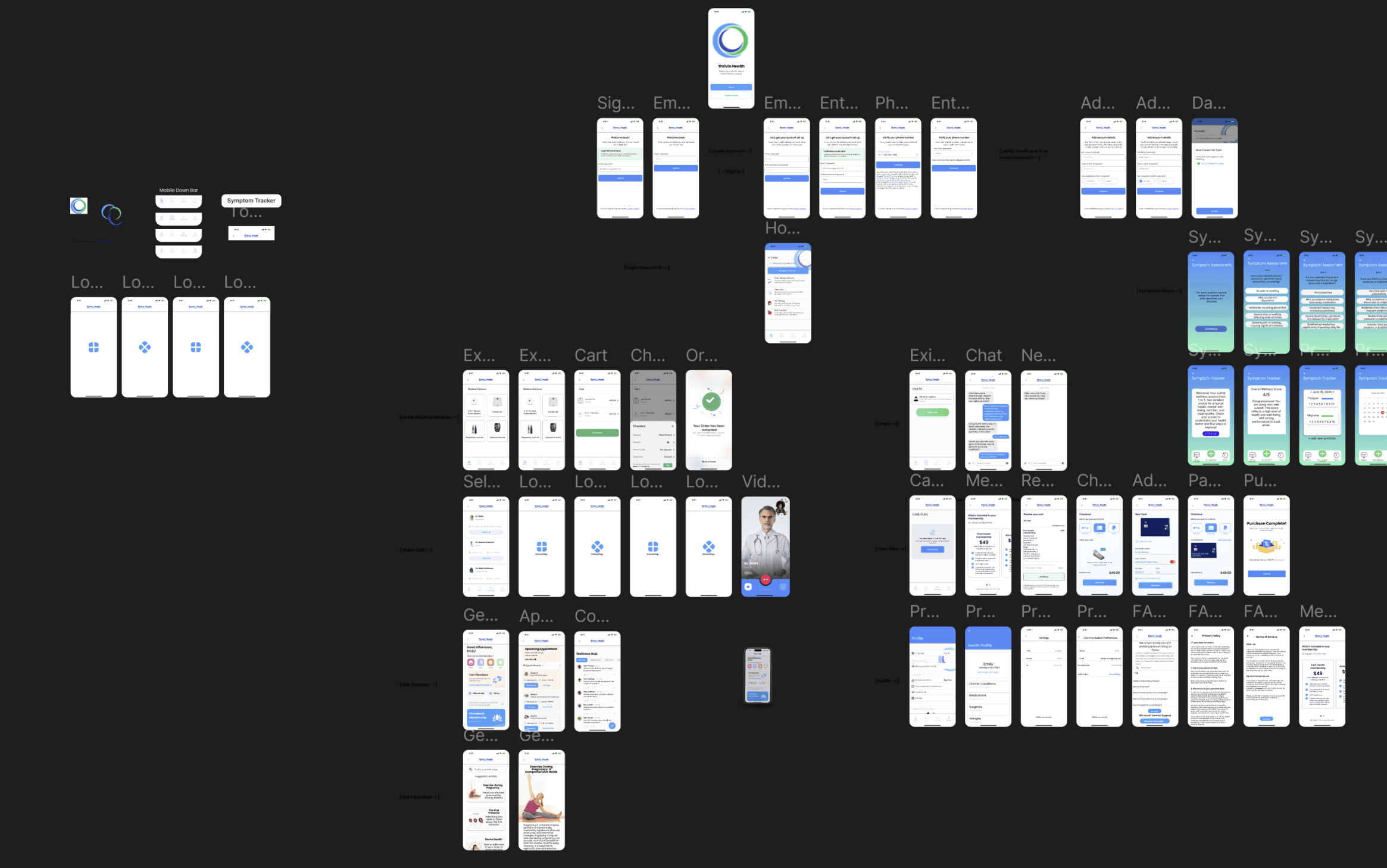
We used the competitive analysis to develop the website and app's site architecture. The website was built with Wix, and the app was wireframed and prototyped in Figma. The screenshot below is just a small snippet of the total numbers of frames!
Final Product
Note: Due to the nature of this project, visuals are limited.
Reflection
The biggest challenge was communication and expectation management, not design.
Take the time to align cross-functional teams, as early clarity prevents redundant work
Confidence matters in advocating for design clarity
Structured decisions work even without research